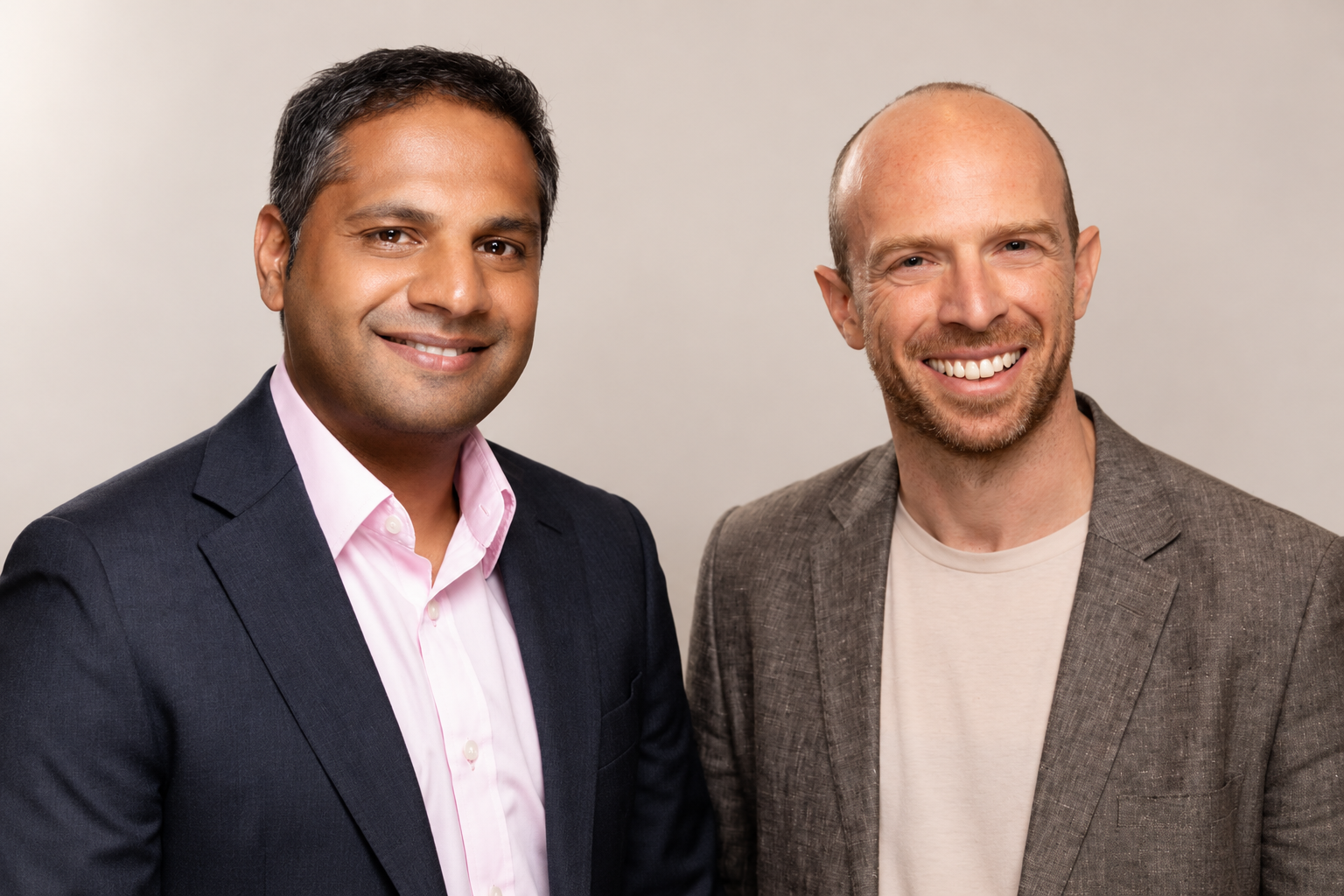
AI may be transforming how quickly legal work can be completed, but Drew Winlaw believes its more significant impact will be on how law firms themselves are designed. The Legal Engineering pioneer and co-founder of Simmons & Simmons’ award-winning in-house AI tool Percy speaks to Modern Law about moving beyond the productivity conversation, combining legal and technical expertise, developing the next generation of lawyers and why the firms that succeed in the AI era will be those prepared to rethink how knowledge, people and technology come together to create value for clients.
Q. You’ve been working at the intersection of law and technology long before the current wave of generative AI. How different does this moment feel, and what has changed most significantly in the way lawyers think about technology?
I’ve worked through several waves of technology adoption in legal services, from workflow automation and process design through to data science and legal engineering. Each of those developments improved how legal services were delivered. However, they generally operated around the edges of legal work.
What feels different about generative AI is that it interacts directly with language. Language sits at the centre of almost everything lawyers do. We read, write, review, negotiate and reason through language, so when a technology becomes capable of supporting those activities, the implications are much broader than with previous innovations.
The biggest change I’ve noticed is not actually the technology itself. It is the change in mindset among lawyers. Ten years ago, technology was often regarded as something managed by specialists. Today, lawyers want to understand it themselves because they can see that it affects how they work, how their clients operate and how legal services may evolve.
The conversation has moved from “What technology should we buy?” to much more fundamental questions about how legal expertise should be applied, where lawyers create the greatest value and how legal services should be designed for the future.
Much of today’s discussion understandably focuses on productivity. Personally, I think that may prove to be one of the least interesting aspects of AI. Productivity gains are important, but every major technology shift ultimately changes how organisations are structured, how expertise is deployed and how value is created.
The bigger issue is how AI will affect operating models, team structures and the way expertise is captured and deployed. I see it less as another technology initiative and more as a catalyst for organisational change across the profession.
Q. You co-founded Percy, Simmons & Simmons’ in-house AI tool. What problem were you originally trying to solve, and how has the way lawyers use Percy evolved as the technology and their confidence with AI have developed?
When we began developing Percy, the objective was quite practical. We could see that large language models were becoming increasingly capable and that people across the firm wanted to explore them.
Lawyers, however, operate in an environment built on trust, confidentiality and professional obligations. We needed a secure way for our people to experiment with the technology: understand its strengths and limitations, and identify where genuine value could be created for clients and the firm.
Education was a central part of that original purpose. People needed direct experience of the technology before they could have informed conversations about its potential.
One advantage we had was that we were not approaching the challenge purely as a traditional law firm. Through Wavelength, we had spent years bringing together lawyers, legal engineers, data scientists and technologists. We were already accustomed to solving legal and business problems through a blend of legal, technical and operational expertise.
Percy emerged from that environment. It was not simply a technology project. It was a collaboration between people with different skills looking at the same challenge from different perspectives.
The earliest uses were largely what you would expect: summarising information, comparing documents, extracting key points and producing first drafts. Those remain valuable applications today. What has changed is the sophistication of the users.
People increasingly see Percy not as a machine that provides answers, but as a system that helps them interrogate information, challenge assumptions and tackle problems at a scale that would previously have been impractical.
There is no substitute for experiencing those challenges first-hand. Percy has played a crucial role in developing AI fluency across the firm since 2023. It gave our people a safe environment in which to learn, experiment and build confidence with generative AI.
Building, deploying and operating Percy ourselves has also taught us a great deal about governance, adoption and organisational change. The AI fluency it created is now helping us make informed choices about the next generation of tools.
We have since added other technologies as part of our broader “build and buy” approach. These tools are not in competition with one another. They form part of an evolving AI ecosystem, with Percy, Legora and Copilot operating in tandem and serving different needs.
Percy, and the foundations beneath it, will also be important as we move towards a more agentic economy, where AI systems can undertake more complex tasks and interact with one another in new ways.
Q. There is a huge amount of excitement around AI in legal services, but not every use case necessarily creates meaningful value. How do you distinguish between something that is genuinely worth building or adopting and something that is simply an interesting application of the technology?
One of the easiest traps with AI is becoming distracted by what is technically impressive rather than what is genuinely useful. Large language models are remarkably capable. It is relatively easy to produce demonstrations that appear transformative. The harder question is whether a particular application improves an outcome for a client, a lawyer or the wider business.
I always try to begin with the problem rather than the technology. If a use case improves quality, increases consistency, reduces unnecessary effort or enables experienced professionals to apply their judgement more effectively, it is worth investigating.
The most valuable applications are often surprisingly practical. They remove friction. They make expertise more accessible. They help people navigate complexity more effectively.
Some of the most significant opportunities arise when AI makes previously uneconomic or impractical work possible. Being able to analyse large collections of material consistently and at speed can be far more powerful than simply shaving a few minutes off an existing task.
As access to capable AI tools becomes more widespread, efficiency alone is unlikely to be a durable source of competitive advantage. Most firms will have access to increasingly capable technology. The real question is whether those tools enable better outcomes.
Clients care about achieving their objectives; they are rarely interested in how many minutes it took to get there. The more meaningful differentiators will be how firms organise themselves, how effectively they capture and protect knowledge, and how successfully they combine human expertise with technology.
The winners are likely to be distinguished less by the tools they possess and more by the capabilities they build around them.
Q. What have you learned about lawyers themselves through introducing AI into their everyday work? Where have you encountered the most enthusiasm, resistance or unexpected behaviour?
One of the biggest lessons for me has been that lawyers are far more adaptable than they are often given credit for. There is a longstanding perception that lawyers are resistant to change. That has generally not been my experience.
Most lawyers are intellectually curious. If they can see a tool helping them solve a genuine problem, or do their job more effectively, they are usually keen to understand it and experiment with it.
The biggest difference between individuals is not enthusiasm. It is confidence. Some people immediately begin testing ideas and pushing boundaries. Others prefer more structure, training and evidence before changing the way they work. Both approaches are entirely reasonable.
In fact, some of the most capable users are not necessarily the earliest adopters. They are often the people who take the time to understand both the strengths and limitations of the technology before integrating it into their work.
What has been particularly interesting is the creativity that emerges when people with different skills work together. Many of the most valuable use cases have not come from a technology team acting in isolation, or from lawyers working alone. They have emerged when lawyers, legal engineers, data scientists and technologists have collaborated.
Lawyers understand the problem; engineers and technical specialists understand what can be designed and built around it. Together, they often reach solutions that neither group would have developed independently.
That has reinforced my belief that bringing different forms of expertise together is not an optional extra. It is becoming a prerequisite for meaningful innovation.
Q. AI is increasingly capable of carrying out work traditionally undertaken by junior lawyers. How do firms embrace those efficiencies without removing the experiences through which the next generation develops legal judgement and expertise?
This is probably one of the most important questions facing the profession. Historically, many lawyers developed expertise through repetition. Reviewing documents, conducting research and analysing information helped to build the pattern recognition that eventually becomes legal judgement.
If AI begins performing some of those activities more efficiently, we need to think carefully about how the next generation acquires the knowledge and experience it needs.
I do not believe the answer is to preserve inefficient processes because that is how previous generations learned. The profession has always evolved alongside technology. Tomorrow’s lawyers will not develop in exactly the same way as today’s.
What matters is identifying which experiences genuinely create capable professionals and then designing training and supervision around them. That is ultimately a leadership challenge rather than an argument for slowing the adoption of useful technology.
There is also an opportunity here. If AI reduces the time junior lawyers spend on repetitive and process-driven activity, they can engage with more complex work earlier in their careers.
Firms can place greater emphasis on judgement, commercial awareness, strategic thinking, empathy and client relationships. In many ways, AI increases the importance of those capabilities rather than reducing them.
Clients ultimately pay for expertise and judgement, not process execution. The challenge is ensuring that future lawyers develop those skills deliberately rather than by accident.
Q. As AI tools become more capable and potentially more autonomous, do you think we will reach a point where they fundamentally change the way legal services are designed and delivered, rather than simply making existing processes faster? What might that look like?
I do think we will reach that point. At present, much of the legal sector is understandably concentrating on productivity. Whenever a new technology emerges, the first instinct is normally to apply it to existing processes and make those processes faster.
That is a sensible starting point. It is rarely where the most significant change ultimately occurs. The more interesting moment comes when organisations stop asking how AI can improve the current process and start asking whether that process still makes sense.
In many respects, we are already seeing the beginnings of that future. Some of the most interesting work today involves lawyers, legal engineers, data scientists, designers and technologists operating as a single team.
I suspect the future law firm will look much more like that than the traditional model of lawyers supported by technology teams sitting on the periphery.
Clients may increasingly expect more than traditional legal advice. They may want help implementing AI within their legal functions, integrating legal expertise into business workflows, or co-developing bespoke solutions.
We may also see the growth of AI-enabled managed services, where technology handles monitoring and routine activity while lawyers intervene when judgement is required.
Human judgement, accountability and trusted relationships will remain central. What will change is the architecture around them. The firms that succeed will not necessarily be those using the most AI. They will be the firms willing to rethink how legal services are designed and delivered.
Q. If you were designing a law firm from scratch today, with the capabilities of AI available from day one, what would you do differently from the traditional law firm model?
If I were designing a law firm today, I would begin by questioning one of the assumptions that has shaped the profession for decades: that time is the best proxy for value.
Traditional law firm models are built around the billable hour because it has historically been the most practical way to measure and price legal work. AI challenges that assumption.
If technology allows work to be delivered faster, more consistently and at greater scale, then firms will increasingly need to focus on outcomes, impact and client experience rather than activity and effort.
Once you start viewing the business through that lens, a number of other assumptions begin to look different as well. Most firms evolved in a world where information was difficult to access, expertise was concentrated in individuals and many processes were highly manual. AI, alongside other technologies, is beginning to remove many of those constraints.
I would build teams that deliberately blend legal, technical and operational expertise. Lawyers would work alongside legal engineers, technologists, data scientists, designers and product specialists within a single delivery model. Technology and operational teams would not sit on the periphery; they would sit alongside lawyers and clients.
I would also invest heavily in capturing, curating and protecting knowledge. Too much valuable expertise remains trapped in documents, inboxes and individual experience. AI creates an opportunity to turn that institutional knowledge into a strategic asset.
I would also avoid being dogmatic about technology. We have learned the value of a “build and buy” approach. There are some capabilities that are strategically important to develop yourself because they deepen your understanding of the technology and create something genuinely distinctive.
There are other situations where the smartest decision is to adopt best-in-class external solutions. The important question is not whether a tool was built internally or bought from a provider. It is whether it solves the problem effectively and can be integrated responsibly into the way people work.
Successful legal businesses operating in the agentic economy will certainly still need outstanding lawyers. That will not change. However, they will also need a much wider range of professionals.
Legal engineers, technologists, data scientists, product specialists, designers and other experts will need to co-create new services with clients. They will also help to design, sell and deliver continuous legal services, rather than purely reactive or matter-based advice.
It is possible to achieve that within current law firm structures. However, I expect the most successful legal businesses of the future to look different from the firms we recognise today. They are likely to take different approaches to contribution, reward and career progression.
Once value is measured through outcomes rather than hours, the range of people creating that value becomes much broader. The firms that thrive will not necessarily be those with the most AI. They will be the firms that adapt their operating models fastest while continuing to earn the trust of their clients.
Drew Winlaw, Partner and Global Large Language Model (LLM) Lead, Simmons & Simmons